www.mthreeadvisory.com
  • Welcome
  • Services
  • Clients
  • Videos
  • Public Speaking
  • Blog
  • Contact

CONTINUOUS IMPROVEMENT; RUNNING AT FULL CAPACITY

6/18/2012

0 Comments

 
In nearly every type of business, there is a compelling need to be functional a high percentage of the time.  Up and running at full capacity.  Have you ever thought about the number of times you are disappointed when another party fails to deliver on full capacity?
  • Your favorite show is about to air and the cable operator has an outage with no estimated of when it will be restored.
  • The backlog of orders has not been this high for month and the machinery in the plan is down for a day with no estimate of when the repair part will arrive.
  • There is only one Automated Teller Machine in the airport terminal you are in and has an “out of order” sign on it, frayed at the edges from the extended sunlight exposure.
It’s times like these when you wish the organizations behind the organizations responsible for these breakdowns had heard of “the five 9s”.  The term refers to a benchmark or standard used by entities such as Information Technology organizations for remaining operable 99.999% of the time.

Some organizations are never perfect in their “up time”.  Others have no choice in the matter.  For instance a 911 call center operation has to have less than a .001% down time, since they deal with life and death cases and it is thus mission critical to their operations.

What if we all strived to be at a 99.999% operational capacity through continuous improvement?  Here are some points to consider in making that a reality:

  • Establish benchmarks: Whether you run a department of people or manage a single process, establish targets for your own performance or that of your Team.
  • Measure everything: Learning about the 5 nines was a reminder of the importance of measuring every aspect of performance, productivity and everything we do, in order to be in a position to improve it.  Second to GE, Google has taught us the benefits of capturing analytics and using it  to improve results.
  • Celebrate incremental improvement: Five 9s may not be realistic in your field.  However, your customers will notice any improvement in your uptime and your associated will be energized by incremental progress to reach your ultimate goal.
Here is the good news.  There is no downside in this mission.  By keeping your sights on the 5 nines, you will naturally improve performance and uptime and if you don’t get there, well you will be 99.99% better than you are today.

We may not be a 911 center, but to our customers, our ability to be up and running 100% of the time is mission critical to them.

0 Comments

I LOST MY JOB TO A SMART PHONE APP

4/9/2012

2 Comments

 
Picture
In May 2006, a Wall Street Journal article declared that large Automated Teller Machine (“ATM”) manufacturers were trying to sell a new generation of machines that would enable customers to deposit cash or checks without an envelope.  Now, that may not be a big deal for some, but for many smaller businesses, which have a respectable quantity of checks and cash have to painstakingly prepare deposit slips, stamp the back of checks and stand in line, to make a deposit with a live teller, it was big news.  I was elated when I read this article, while at the same time thinking “not in my lifetime”. 

When Wachovia Bank rolled out the Wincor Nixdorf ATMs at my branch, I was celebrating by dancing (literally) when I made my first paperless deposit.  It was night time and I was holding my receipt with a clear image of each check deposited and I thought to myself—Thank You IT engineers, for enabling me the freedom to deposit money without all the fuss of having to do it during normal banking hours, waiting in line  and as an added bonus, a detailed photo of my deposit evidencing my transaction.

Then a couple of months ago, I saw the Chase television commercial that has a customer using a Smart Phone App to take a picture of a check and making a deposit!  A mini ATM in your pocket.  According to CNBC, scanners have already been sold by banks to business customers who then deposit a large amount of checks deposited without entering a bank branch.

Here is a secret.  The banks are planning to fund these new devices with the reduction in teller headcount, a trend which is likely to continue.  So what does this mean to you?

  • Stay alert and current. Be vigilant with the technological changes that are taking place in your sandbox and ensure you understand the ramifications to your current post and your future.  Most who read the WSJ article in 2006 thought it would be a decade before the technology came to life, when in fact it was in operation in less than 3 years.  And sadly, most took no proactive steps as a result.
  • Be a part of the innovative solution. Find ways to integrate or develop technology solutions to improve efficiency with your work.  With the advent of the work force reductions, it is doubtful that companies will fill those positions in the future.  In fact, they may find more ways to reduce head count.  Be a visionary in introducing technological or process improvement solutions to aid your employer in reducing payroll.
  • Mitigate vulnerability with tangent occupations. Advances described in this article also impact companies that print deposit slips, entities that supply envelopes and to some extent, the US Postal Service.  Beware of the indirect impact of technological innovation on you or your company.
We embrace innovation when it benefits us and we see it delivered successfully.  Just need to make sure we are smart enough not to be put out of our job by a Smart Phone.


2 Comments

REJOICING ABOUT THE RECESSION

1/16/2012

0 Comments

 
Picture
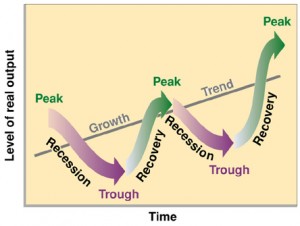
One would be foolish to minimize the pain and suffering this worldwide recession has caused in the lives of so many.  After every crisis we have an opportunity to learn what good came out of it.  Now that the recession is over (and yes, it is over, even though the pain persists) it is time for us to look at the positive impact from this economic malaise.

In any capitalistic society, positive and negative business cycles will occur….it is inevitable.  Since our Independence in 1776, there have been nearly 50 recessions.  It is highly likely that the United States will experience more recessions, some even worse than what we just experienced.

What got us here was excess, specifically, owning homes we could not afford to own, and then owning a second home, when we had no business owning the first. Abundance of credit combined with lack of discipline, resulted in a spiraling downward domino effect through the economic food chain.

Where is the good in all this?  Here are some of the positive results stemming from a recession:

  • Weeds out the excess. Circuit City gave way to Best Buy, Netflix (NASDAQ: $118) has reigned over Blockbuster (Pink Sheets: $0.16), GM has abandoned the Pontiac and Saturn brands, to name a few examples.  There is an intersection in Atlanta that has Starbucks, Caribou and Dunkin Donuts all represented……the weakest of the three will be gone before year end.  Weaker companies giving way to stronger ones is in the benefit of the consumer long term.
  • Increases efficiency in companies. Job creep.  That is the simplest way to explain how positions get added to companies in times of growth and expansion and then when the cycle shifts those are the first jobs to become redundant.  In my last position, there were 5 layers between the customer and the President of the Division; I was the 5th layer, the most expensive and the easiest to cross off the organizational chart.  Even though I was impacted, it was the right call and with sales shrinking, there were no consequences for the customer or the company.
  • Improves customer service. Attitudes are reset.  When the economy is growing, the customer base grows as well, and we have a strong tendency to take the customer for granted.  After all, there are so many and if we lose one, we’ll replace it with another.  A recession takes us back to appreciating the customer once again, a critical component to a booming economy.
All is not lost in a recession; the engine needs a periodic cleaning and the challenge is being prepared, back in the driver’s seat with a fresh perspective, moving forward.


0 Comments

POINT OF IMPACT

12/5/2011

0 Comments

 
Picture
One could argue that we earn our pay when we walk into our place of employment.  It would be a terribly weak argument, especially if you asked the person signing the check.

Having been a payer and a payee, I can claim without hesitation that a significant portion of our compensation is “unearned”.  Here is why.

There are 260 days in a work year.  Deducting two weeks for vacation and excluding overtime, we need to account for 2,000 hours of “work”.  Most employees are hired because the hiring manage is filling a box with someone who needs to fulfill the duties outlined in the job description associated with that box.  Unfortunately, most of that time is unproductive or non-essential.

Regardless of which box on the organizational chart we peak into, every job has that moment of impact when the individual’s pay is earned. For example, commercial airline pilots are viewed  by some with distain, over how much they get paid and how little they work.  By law, pilots can’t fly for more than 1,000 hours a year (about half the hours of an average wage earner) and on average they made ~$125,000 in 2009, or about $125 per hour.  If you have been on a plane, you know when that pilot earns every penny of that compensation……the split second those tires hit the runway.
All those other hours involved with safety checks, paperwork, inspections are important, but frankly administrative in nature or dependent on others.

  • What is your point of impact? Are you and the person writing the check clear on when you earn your keep?  For most of us there should be more than one point of impact, given 2,000 hours of opportunity.  Make sure your boss knows your point of impact.
  • Increase your flash points. Advancement and job longevity comes to those who deliver their earning moments repeatedly.  Sift through the work clutter and eliminate non-value added activity, delegate non-critical tasks, and focus on where you make a difference.  Keep adding high impact tasks to your portfolio of deliverables.
  • Embrace DIRTFT. For everything you do and most importantly the point of impact tasks, make sure you Do It Right The First Time.  You can only land a plane safely one way.
No all of us can be a pilot, but ALL of us can be valued as much as a pilot if we can deliver on our own individual points of impact.


0 Comments

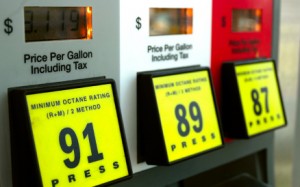
WHAT’S YOUR OCTANE GRADE?

9/26/2011

0 Comments

 
Picture
Ever meet someone who you have to step back from because they are glowing with energy, competence and presence?  Rare, but memorable when it occurs.

Octane ratings for gasoline, invented by American chemist Russell Marker in 1926, is a complex calculation involving measuring various chemicals and their interaction and impact on “anti-knocking” in engines.  Around the world, the octane in gasoline for automobiles is measured in various grades; the most popular in the US being “Regular”, “Mid-Grade” and “Premium”.  Higher octane ratings correlate to higher activation energies–the amount of energy necessary to start a chemical reaction.

Leaders and managers associate with people in each of these fuel grades.  While you may think that most would be tagged as Regular, the reality is the majority of people are in the Mid-Grade range.  Common characteristics of this group are that they provide some energy, when they are engaged in something they enjoy doing.  They spark when they have direction or are given incentives to do what they should be doing.  About 80% of the work force would fit into this grade, and 80% of what they do could be done by another Mid-Grade person.  In some respects, there is no point of differentiation in this category.  Not enough performance to fuel a high-powered organization and higher cost than a Standard person, but not sure what you get for the extra cost.

About 10% of the work force would be considered Regular grade.  They are affordable, abundantly available and never require a premium.  You can’t use these folks in high risk, or high energy projects and you can’t hire them into highly complex organizations, as they will produce engine knock.  They fit into ordinary situations.

About 10% of those remaining are in the Premium category, with the highest grade of Octane.  These are the players; their compensation carries a premium, they are complex in chemical, or should I say, DNA structure.  They run at a higher compression ratio without causing detonation.  They deliver more output and they are the ones highly successful organizations seek.

  • Measure your octane.  Do an honest assessment of your own grade, and then put into place a plan to move up a grade.  If you are already a Premium, develop a plan to become supercharged.
  • Strengthen your grade. Hardly anyone is buying Mid-Grade fuel.  Some stations have done away with it all together.  If you are stuck in this grade, build your brand by increasing your skills and move up to Premium class….what are people willing to pay for you?
  • Ignite your energy. Surround yourself with high Octane performers in an environment where everyone’s energy drives high performance. Be an octane booster for your organization and get others to continuously improve whatever they are doing.
We all have a choice in how our octane is graded by others.  Be proactive.  Don’t let others define your octane level.  Glow with energy and fuel high performance.


0 Comments

THE CUSTOMER IS NOT ALWAYS RIGHT

8/15/2011

0 Comments

 
Picture
At the risk of committing heresy, especially with my own core values, the reality is that the customer is not always right.  I am a firm believer of the business pyramid for world class organizations, which puts the customer at the top, the associates on the bottom left and the company on the bottom right.  World class companies do not rotate the pyramid, to move the interests of customers or the company to the top.  But sometimes this hierarchy gets abused.

For example, a discount retailer mandates that attendants at their self service gas station leave their booths whenever a customer is pumping gas.  On a recent visit at 6:00 am, with the temperature at 18 degrees, the attendant followed the company rule to the letter.  No words exchanged; no value added by this “out of the booth” experience.  Just pain and suffering for the associate.

As the economy has tightened, some customers have become unrealistic with their expectations.  Delighting the customer is never easy, and in this economy where consumer spending is guarded even more challenging as “the customer is King” has been replaced with “the customer is God”.

At the same time, the associate serving those customers has been left in a state of constant anxiety over job loss, more work for the same pay, more hours and less pay per hour, and a soar tongue from biting down harder and with greater frequency.

Customer loyalty has been shunned, as the consumer trades value and service for lower cost and cheaper prices.  In the meantime, the associate stays loyal, sometimes due to lack of jobs, but more often because of pride and dedication to their employer.

It’s time to rotate the business pyramid.

  • Value your associate capital. Chances are you have let the low performers go and thus have your best staff at your side.  Treat them as an asset that needs to be nurtured.  Don’t be so manically customer focused that you lose sight of your teammates.
  • Maintain a healthy balance. Without a healthy and vibrant workforce, we will never be able to delight the customer.  Be razor sharp in taking sides.  Associates need to understand the rationale for irrational customer concessions and that theyare not the ones who will pay the price.
  • Reward your associates equally with customers. Cash is tight, and whatever you do have is going to customer acquisition, service or promotions.  Associates understand that, as long as you are willing to recognize their accomplishments with sometime as simple as a congratulatory letter on their contributions.
The economy is turning and will get even stronger.  Make sure your associates are by your side…and not chasing a buck somewhere else.


0 Comments

WHY “A” STUDENTS DON’T RUN THE WORLD

6/20/2011

1 Comment

 
PicturePresident Harry Truman at age 13, circa 1897
In coaching my twins who are pre-med freshmen at the University of Texas Austin about the importance of grades and academic excellence, I am quick to remind them that success in this world is predicated on variables well beyond good grades.  For the younger readers of this BLOG, it was President Harry S. Truman who coined the phrase “The “C” Students Run the World”.  After graduating high school, he worked as a timekeeper on the Santa Fe Railroad sleeping in hobo camps.

Truman never went to college, making him the only President to have served after 1897 who did not earn a college degree.  He later became the owner of a haberdashery and then a farmer.

Truman went on to become one of our most successful Presidents, serving two full terms, with no college education. This may be obvious, but success is seldom a measure of grades.  Leadership has many definitions.  Here are some ways in which you can be a leader without being a scholar:

  • Make a difference in everything you touch. Regardless of your station in life, be a memorable and consistent contributor.  Leave a positive imprint in your groups, in your departments and with your boss, peers and direct reports.
  • Master the art of influence. It’s not about how book smart you are; it’s about how you can influence people to accept your ideas.  Of all the traits that leaders have, the ability to persuade is the single most important trait.  It takes a lot of human interaction to understand human behavior and that it takes to shape opinion in a certain direction.
  • Mind the gap. Being book smart is not enough.  Being multi-dimensional is.  Be competent in your subject matter, and then leap to the other side of the brain and flex it to deal with building relationships.  An average doctor with excellent beside manners has a better chance of running a major hospital than a brilliant one with no people skills.
President Truman had it right; the best and the brightest don’t always get the advancement opportunities.  Great leaders like President Truman take responsibility for their successes and failures.  I guess that’s why he was also the one who coined the phrase:  “The Buck Stops Here”.


1 Comment

DARK SIDE OF THE MOON

6/20/2011

2 Comments

 
Picture
It is tough being a great manager.  In some respects tougher than being at the head of the organization.  And at times, it feels like being on the dark side of the moon.  Being a successful manager is even more difficult when you take into account having the skill to withstand the pressure from the top and the angst of the people below.  Great managers shield their teams from the heat resonated at the top, while not flinching at the push back they get from their direct reports.  They serve selflessly and multi-task to bridge the gaps in skill sets among their teams.

The number one attribute of a great manager is described by a single word--consistency.

While listening to cable radio recently, I was reminded of the countless names of recording artists who never made it past a single hit.  The music scene is littered with sprinters instead of marathoners.  Very few have a lasting and consistent following.  British rock band, Pink Floyd has the record for the most number of weeks on the Billboard top 100 list for Dark Side of the Moon……741 weeks (http://tinyurl.com/5ql2f2). That calculates to over 14 years.

Here are some tips on how to be a consistent manager:

  • Stay true to your style. A standard interview question is:  “Tell me about your management style?”  We should ask ourselves that question from time to time to ensure we are not wavering on how we approach the art of management.
  • Practice your message. Sometimes managers have one approach to one-on-one communication, and a completely different one as to tone and pitch, when delivered to the masses.  This is especially critical when we are operating under pressure and have a difficult message to communicate.
  • Be grounded. Don’t let others define who you are.  Managers who are consistent stay resilient to peer pressure or while simultaneously in the presence of their boss and their teams.  Management leadership means having the courage to be your own person.
Your organization will place a high value for your ability to be a consistent manager.And who knows…you may even become a rock star.


2 Comments

ONLY THE PARANOID SURVIVE

5/9/2011

1 Comment

 
It is unfortunate and painful to watch the demise of a company that re-shaped the automotive world, with great cars which you could buy, often after being on a waiting list.

The company that delivered on the promise of “Delighting the Customer” seemed unstoppable in gaining market share everywhere on earth.  In 2009, Toyota accounted for 1.3% of Japan’s GDP, making it the single largest company in that country.  The dynasty that was built by Kiichiro Toyoda is now in spin control.

So what happened? The press has done a good job of telling the story, thus we will not do it justice here.  Instead, we should reflect on what we an learn from this crushing blow to a corporate icon.

How often do we have to be reminded that quality can not be sacrificed?  We have seen this fatal mistake occur on numerous occasions, including the errors in judgment and the lack of oversight that brought Arthur Andersen to its knees.  Quality programs sometimes get mistaken for “insurance”….you don’t need it until there is a catastrophe.

Here are some ways to ensure that your brand, personal or corporate, is protected:
  • Take responsibility for quality. The final product, whether it is an automobile or a one page report, is the imprint we leave with an internal or external customer.  That final scrub has to be done in an organized and diligent manner.  If the job is delegated, make sure the person in the quality role is competent to do the job and confident that exceptions will be brought to your attention, without penalty.
  • Never get comfortable. Once we have gained the confidence of our internal or external customer, it is easy to take it for granted.  The stronger our prior attention to quality, the more vulnerable we are, because the customer’s expectations have risen geometrically above our peers and competitors.  Therefore, diligence has to grow exponentially.
  • Stay glued to the customer. The further you are from the customer, the more vulnerable you are to quality deficiencies.  The silent killer is the customer who leaves you for the competition and does not tell you about their expectation gap, or if they do express dissatisfaction, their voice never reaches you.  Culture, ego, rank—nothing should keep you away from the voice of the customer.
Frank Blake, CEO of The Home Depot, needs to be recognized as a leader who has taken responsibility for the customer experience in the stores, has not allowed the designation of “second largest retailer” comfort him and has listened with intensity to customers during his store visits.  Their most recent results show the difference he and his team have made.

Protect your brand….with a healthy sense of paranoia.

1 Comment

IT’S OKAY TO BE #2

4/11/2011

1 Comment

 
Every four years, we are reminded that the Office of the President of the United States casts a long shadow on the role of the Vice President.  No one in Hollywood is interested in making a blockbuster movie about the Vice President of the United States. To my knowledge, no Vice President has ever been named Time magazine’s Man of the Year, since the annual event was launched in 1927. As a culture, we thrive on the idea of being Number 1 and the mere thought of aspiring to be Number 2 is frowned upon as an imperfection.

CEO’s tend to be visionaries and rewarded for seeing the future.  COO’s enjoy the “high” that results from bringing visions to realities.  The good news is that every organization benefits from both of these individuals in different ways.  There is a counterbalance that makes the leadership union complete.  The late Robert Goizueta and Donald Keough had that symbiotic relationship when they were at the Coca-Cola Company.

Business Unit Leaders, or “BULs” as I like to call them, have unique talents which got them to the top post.  But having a management group with those same talents would not necessarily ensure success.  It has been my experience that we are either wired for strategic thinking or we are execution driven.  Rarely, do the characteristics of visionaries and ground-engaged managers get packaged into a single individual.

Here are some differences between BULs and #2′s:

Business Unit Leader
  • Futuristic
  • Conceptual
  • Dynamic
  • Value absence of routine
  • Blind spot—details

Second in Command
  • Realist
  • Industrious
  • Responsible
  • Value predictability and order
  • Blind spot—listening to others

Notice these two personalities are not polar opposites.  In fact, there are many complimentary characteristics, which makes the combination of a strong BUL and a capable #2 such a powerful team.

In the end, it is a rewarding experience to be the right hand person to a dynamic BUL.  There is an immense sense of accomplishment, when a futuristic idea is brought to life, profits are increased and customers are delighted.

In the business and academic world, we need to praise managers who work selflessly to gain the respect and the right to be the “Go to Person” and not to consider them failures for never making it to the top post.

Second in commands play a significant role in their respective organizations. Take for example the appointment of Tim Cook, COO of Apple to take over Steve Jobs’ responsibilities during his extended medical leave.  Apple customers, employees and shareholders were seeking comfort and strength in Steve’s absence. And they got what they were seeking.  Until now, we had never heard much, if anything, about Mr. Cook, because he was quietly busy implementing Steve’s vision and most importantly, earning his respect to fill his large shoes while he recuperates.  A Fuqua Scholar who earned his M.B.A from Duke University, he will show his strength as a leader during this tenuous period in Apple’s history and when he is needed most.  How rewarding to be #2.

1 Comment
<<Previous
Forward>>

    Archives

    December 2015
    October 2014
    July 2014
    April 2014
    January 2014
    October 2013
    June 2013
    March 2013
    December 2012
    August 2012
    June 2012
    April 2012
    January 2012
    December 2011
    September 2011
    August 2011
    June 2011
    May 2011
    April 2011
    March 2011
    February 2011
    January 2011
    December 2010

    Categories

    All

    RSS Feed

Business Advisory

Investment Banking

Training & Development


© COPYRIGHT 2015. ALL RIGHTS RESERVED.